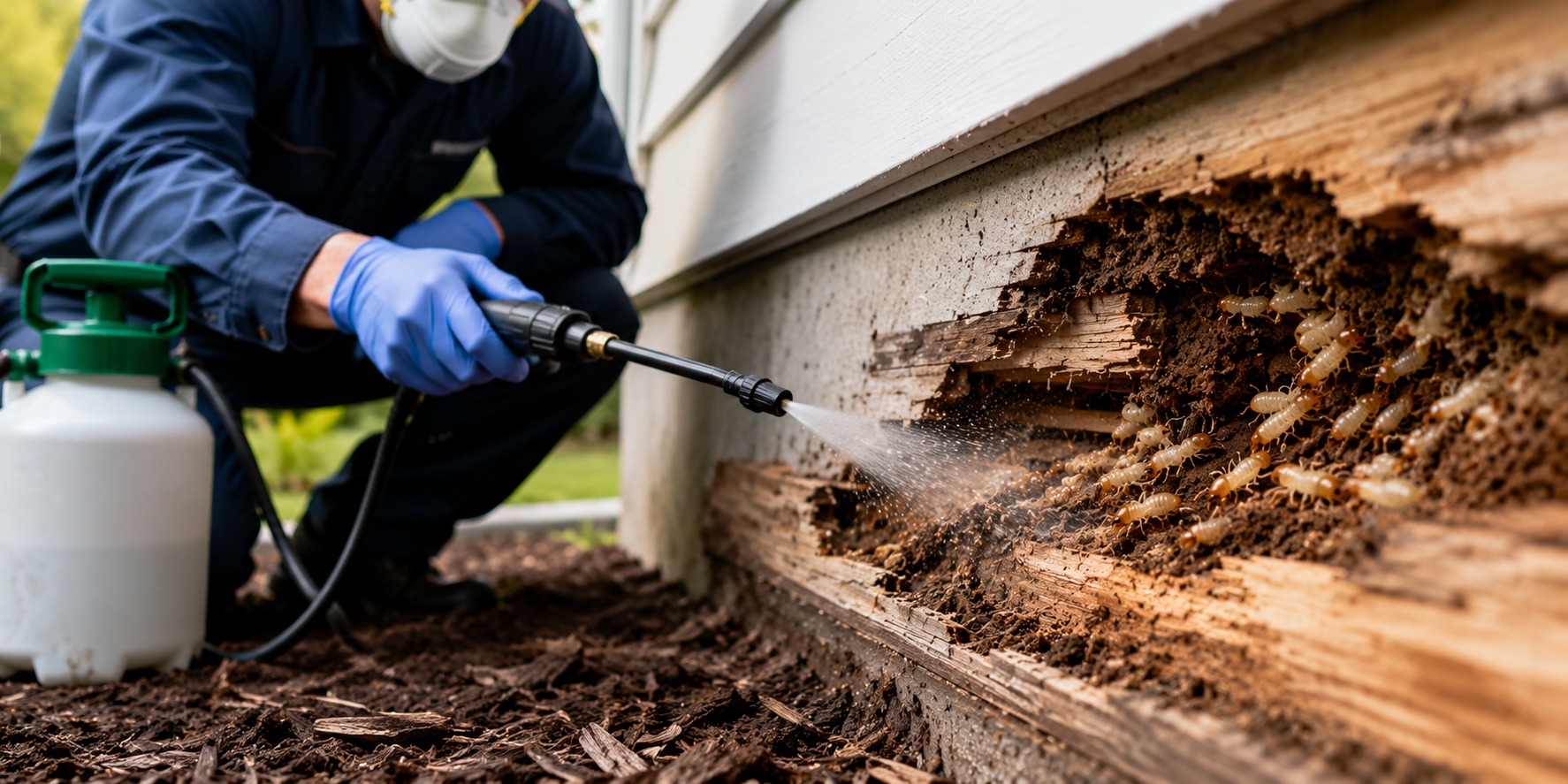
Termites are often called the "silent destroyer" because they can chew through wood, flooring, and even wallpaper undetected. By the time most homeowners notice the damage, the termite colony has been established for months or even years.
1. Mud Tubes on Walls or Foundation
Subterranean termites build mud tubes (also called shelter tubes) about the width of a pencil to travel between their colony in the soil and their food source — your home's timber. Look for these along your home's foundation, walls, or crawl space.
2. Hollow-Sounding Timber
Tap on wooden surfaces with a screwdriver handle. If the sound is hollow rather than solid, termites may have eaten the timber from the inside out.
3. Discarded Wings Near Doors and Windows
Reproductive termites (called alates or swarmers) shed their wings after establishing a new colony. Finding small, paired wings — often translucent and equal in size — near light sources is a serious warning sign.
4. Sagging Floors or Ceilings
When termites eat floor joists or ceiling supports, the structural integrity weakens, causing floors to sag or feel springy and ceilings to bow.
5. Small Holes in Drywall
Termites sometimes create pinholes in plasterboard or drywall as they work through the material behind it. These may be accompanied by small, sandy pellets (termite droppings).